The best kitchen sink is not automatically the biggest or the most expensive. It is the one that matches the objects you wash, the way you divide prep from cleanup, and the cabinet already under your counter. A stockpot cook, a two-plate household and a weekend baker can all be disappointed by the same fashionable sink for completely different reasons.
1. Start with the limits you cannot change
Measure the sink-base cabinet from the inside, then confirm the countertop opening, disposal, trap, dishwasher connections and any drawers or organizers below. A nominal 33-inch sink commonly needs a 36-inch base cabinet; a 30-inch sink commonly needs a 33-inch base. Those are planning rules, not substitutes for the actual product drawing.
Bowl depth matters just as much as width. Eight inches is comfortable for lighter daily use and leaves more room below. Nine to ten inches hides dishes, limits splash and holds large cookware, but it also lowers the working surface and can be tiring for shorter users. Before choosing the deepest bowl available, subtract the sink depth, drain and disposal from the cabinet height you actually have.
2. For big-batch cooking: choose one wide, deep bowl
If you cook soup in a large stockpot, roast on sheet pans or wash a Dutch oven after feeding a crowd, a full-width single bowl is usually the most forgiving layout. Look for roughly 30 to 33 inches of overall width and a nine- to ten-inch bowl. The uninterrupted floor lets a roasting pan lie flat; a center divider does not steal the last few inches exactly where a pot handle needs to go.
Stainless steel is a practical match because it is light, tolerant of rapid temperature changes and available in many shapes. Sixteen-gauge steel is thicker than 18-gauge, but good sound pads and undercoating can matter more to noise than gauge alone. Pair the bowl with a pull-down faucet whose spray head reaches the far corners. Check that the spout lands near the drain rather than at the back wall, and avoid an unnecessarily tall arc if the bowl is shallow.
3. For light daily use: keep the bowl comfortable
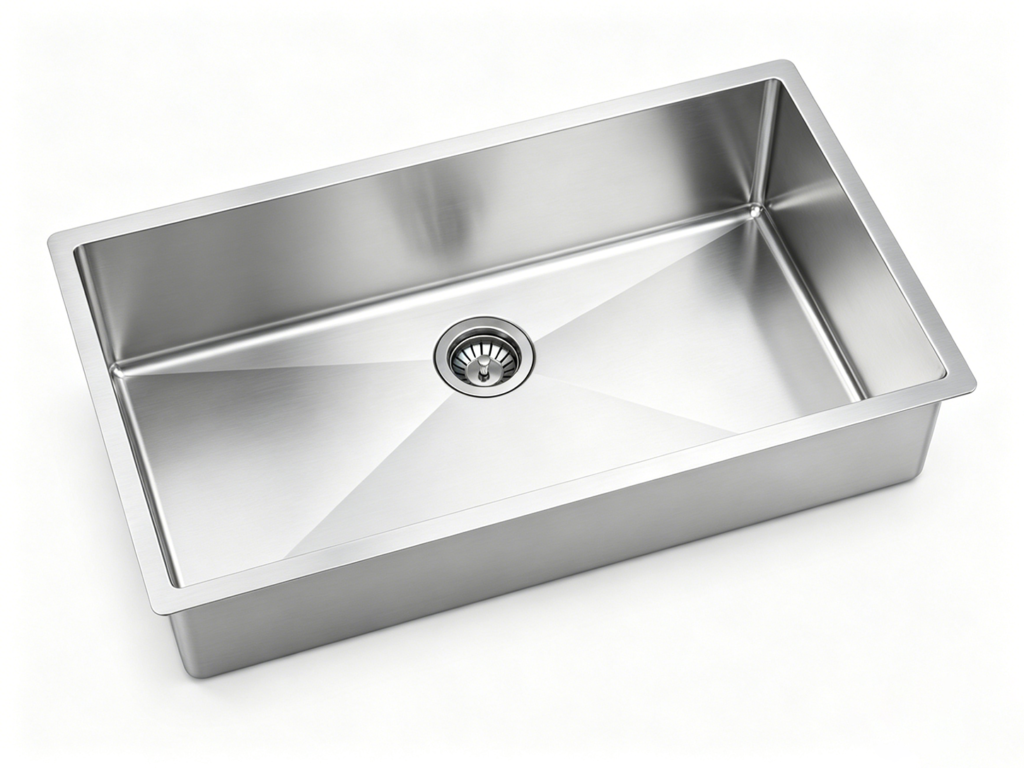
When the usual load is coffee cups, breakfast plates and one small pan, a 24- to 30-inch single bowl at eight to nine inches deep can be easier to live with than a cavernous basin. It takes less water to create a useful soaking level, is easier to reach into, and preserves cabinet space. A compact single bowl is often more flexible than two very small bowls.
Choose stainless steel for low weight and straightforward upkeep, or quartz composite for a quieter, colored surface. A medium-arc pull-out or pull-down faucet works well; prioritize smooth hose movement, secure docking and a reach that lands inside the bowl. If a window sits behind the sink, measure handle rotation and spout height before ordering.
4. For weekend baking: protect the flat workspace
Bakers create awkward cleanup: sheet pans, cooling racks, mixer bowls and sticky tools. A 30- to 33-inch single bowl with a broad, relatively flat floor is more useful than a narrow deep cavity. Nine inches of depth is usually enough to control splash without making the bottom hard to reach. A rear-offset drain leaves more uninterrupted floor area and can free cabinet space for a pull-out bin.
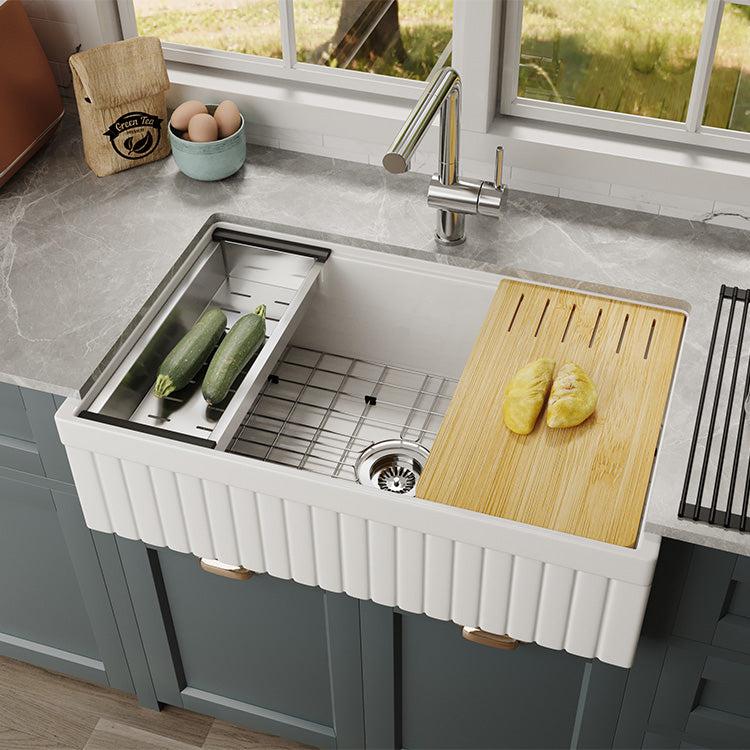
A workstation ledge is especially helpful because a cutting board, colander or roll-up rack can sit above the bowl. Fireclay offers a smooth glazed surface and farmhouse character; quartz composite is quieter and available in dark colors. Both are far heavier than stainless steel, so the cabinet must support the sink from below. For the faucet, choose a pull-down head with a controllable aerated stream and spray; power is useful, but a harsh jet can scatter flour paste across the counter.
5. When a double bowl really earns its divider
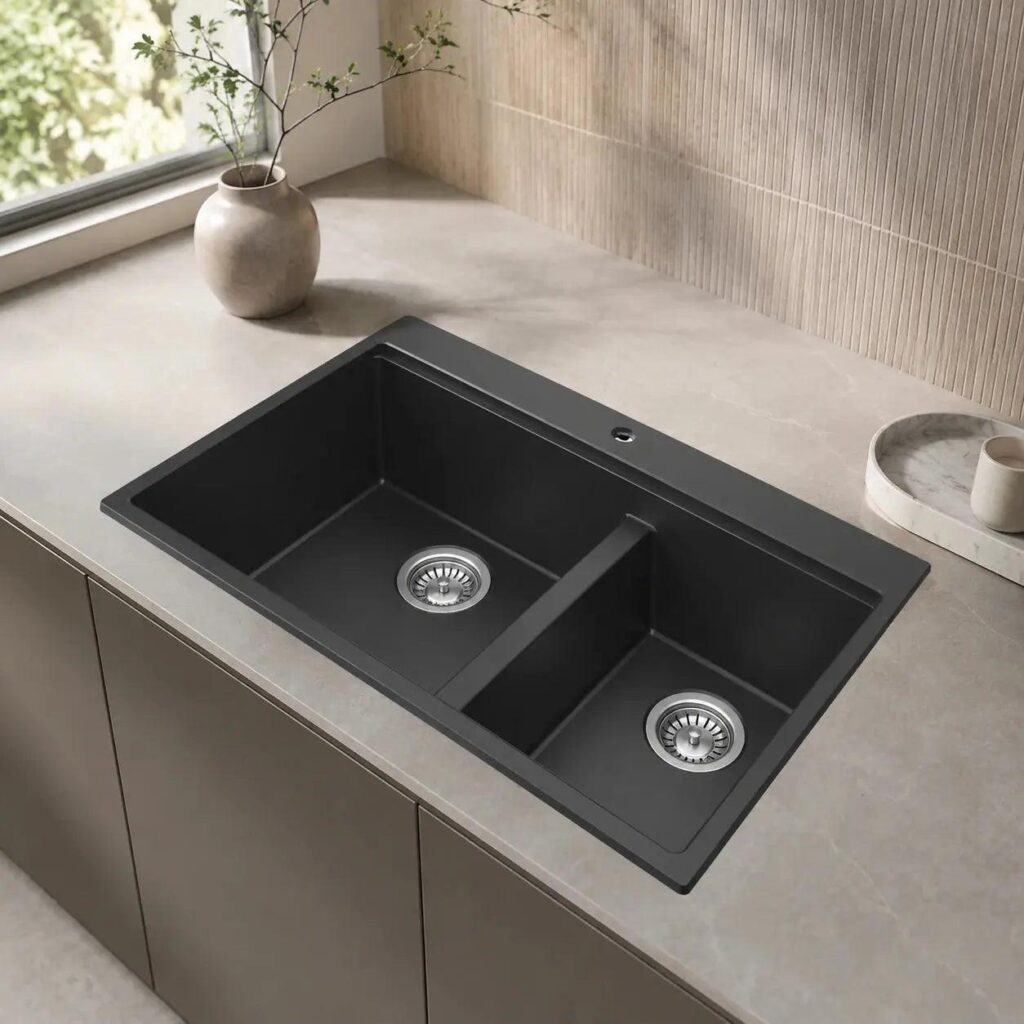
A double bowl makes sense when you regularly keep one side clean while the other soaks, hand-wash while dishes drain, or separate food prep from cleanup. A 50/50 split is orderly, but each bowl can be too small for a sheet pan. A 60/40 split or a low divider preserves more large-item capacity. Do not choose two bowls simply because the old sink had two; choose them because your routine uses two water zones at the same time.
6. What price and weight look like in real products
Current retail examples show why installation planning belongs in the budget. Sinkology’s 33-by-22-by-8-inch Angelico single-bowl, 18-gauge stainless model lists at $349 MSRP and the specification sheet gives a 20-pound sink weight. Elkay’s 33-by-18.5-by-9.5-inch Quartz Classic equal double-bowl model lists at $806 to $961 and gives a 52-pound shipping weight. Sinkology’s 33-by-20.9-by-10-inch Austen fireclay farmhouse model lists at $399 MSRP and weighs 105 pounds.
These are market examples, not recommendations, and street prices change. The useful comparison is structural: a similarly sized fireclay sink can weigh more than five times as much as a stainless sink. Budget for a support cradle, cabinet work and professional countertop fabrication where required—not only for the sink in the cart.
7. Two expensive mistakes to avoid
1. Cutting the cabinet or countertop from a generic size
A label such as “33-inch sink” does not tell you the exact rim, apron, bowl or corner dimensions. Farmhouse and fireclay sinks can also vary slightly after firing. Have the actual sink and its current drawing on site before final fabrication. Confirm minimum cabinet width, reveal style, support height, drain position and accessory clearance. A wrong cut can cost more to repair than the sink itself.
2. Choosing the faucet as a separate decoration
Spout reach, height and handle clearance determine whether water lands near the drain, strikes the back wall or splashes over the front. Measure from the faucet-hole center to the bowl center, then compare that distance with the faucet’s stated reach. Check backsplash and window clearance, countertop thickness, hose path and the space needed for soap dispensers or air switches. The best-looking faucet is a poor match if its geometry fights the sink.
8. A 60-second decision
- Big pots and batch cooking: Choose a 30- to 33-inch single bowl, nine to ten inches deep, with a well-reaching pull-down faucet.
- Light everyday use: Choose a 24- to 30-inch single bowl, eight to nine inches deep, with a medium-arc pull-out or pull-down faucet.
- Weekend baking: Choose a 30- to 33-inch single bowl or workstation, about nine inches deep, with an aerated pull-down faucet.
- Two simultaneous wash zones: Choose a 60/40, low-divide or full double bowl only after checking that your largest pan fits.
Start with behavior, then verify dimensions, weight and faucet geometry. That order turns the sink from a showroom choice into a tool that makes the kitchen easier every day.
About the author. Rokan Liu works with kitchen and bath fixture manufacturing and product specification at SANIKB, with a focus on matching sink materials, dimensions and installation details to real-world use.
9. Editor reference notes
Prices and weights were checked July 23, 2026. Retail selling prices may vary. Stainless example: Sinkology Angelico product page and official specification sheet.
Quartz example: Elkay Quartz Classic ELGU3322 product page.
Fireclay example: Sinkology Austen 33-inch product page and official specification sheet.
Planning reference: SANIKB standard kitchen sink sizes reference. All three photographs are SANIKB-owned product images supplied for editorial use.