Throwing away food that went bad before you got around to eating it is one of the most common and frustrating kitchen problems, and a lot of that comes down to how it’s stored.
The good news is you don’t need special equipment or complicated systems to keep food fresh longer. It mostly comes down to understanding how different foods spoil and giving them the right conditions. This guide walks you through what to do with your fridge, freezer, pantry, and countertop, with practical tips that actually make a difference.
Understanding why food spoils
Food goes bad for three main reasons: bacteria, moisture loss, and oxidation. Different foods are more sensitive to different factors, which is why there’s no one right way to store everything. Bacteria can grow quickly between 40°F and 140°F. If perishable food sits in that range for more than two hours, it can become unsafe, even if it still looks and smells fine.
Moisture loss is what makes produce wilt, bread go stale, and meat develop freezer burn. Foods with a lot of water in them are especially vulnerable. Oxidation is what turns cut fruit brown, makes oils go bad, and dulls the flavor of spices. Limiting exposure to air slows this process down quite a bit. Once you know what affects a specific food, choosing how to store it becomes much easier.
Refrigerator storage
Your refrigerator is your most important tool for keeping food safe, but where you put things inside actually matters.
Temperature zones
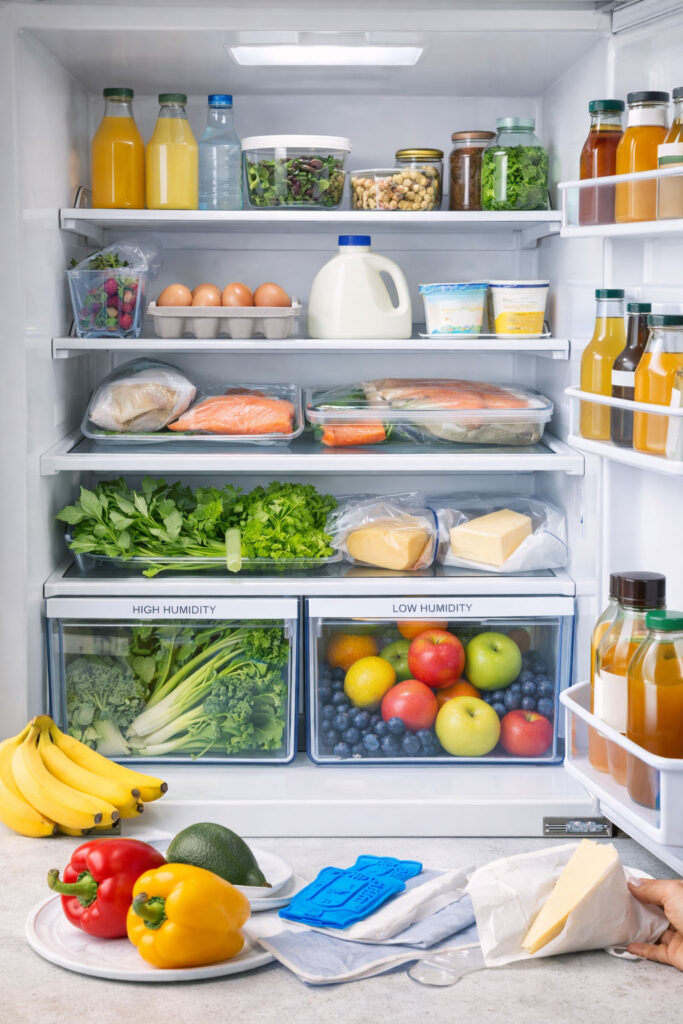
Most fridges aren’t the same temperature all the way through. The back of the bottom shelf is usually the coldest spot, while the door is the warmest since it’s exposed to room air every time you open it. The door is the worst place for milk and eggs.
- Bottom shelf (coldest): Raw meat, poultry, and fish. Keeping them here also prevents drips from contaminating other foods.
- Middle shelves: Dairy, eggs, leftovers, and deli meats.
- Upper shelves: Ready to eat foods, drinks, and herbs.
- Crisper drawers: Fruits and vegetables, ideally separated. Use high humidity for vegetables and low humidity for fruits.
- Door shelves: Condiments, butter, and items that can handle slight temperature changes.
Simple fridge tips that help
Keep your fridge at 37°F to 38°F. Many people set it too warm, and a cheap thermometer can make a big difference. Don’t overcrowd it. Cold air needs room to circulate, and a packed fridge creates warm spots where food spoils faster. Store herbs like flowers. Trim the stems, place them in a glass of water, and loosely cover them with a plastic bag. Herbs like parsley, cilantro, and basil can last two to three weeks this way instead of just a few days. Wrap cheese in wax paper instead of plastic. Cheese needs to breathe, and plastic traps moisture, which speeds up mold growth. Let hot food cool before putting it in the fridge. Adding hot food raises the temperature around it. Just don’t leave it out longer than two hours.
Freezer storage
Your freezer is the best tool you have for long term storage. At 0°F, bacterial growth stops completely. Food can stay safe indefinitely, although quality does decline over time.
Preventing freezer burn
Freezer burn happens when moisture escapes and forms ice crystals on the surface of food. It won’t make food unsafe, but it does hurt the texture and flavor. The key is keeping air out.
Use freezer bags or containers that are designed for freezing. Regular ones aren’t thick enough for long term storage. Remove as much air as possible before sealing. And try to use containers that match the amount of food so there isn’t a lot of empty space.
Freeze liquids flat. Pour soups or sauces into freezer bags and lay them flat until frozen. Once solid, you can store them upright to save space and make thawing easier.
Label everything with the contents and the date. After a few weeks, everything in the freezer starts to look the same.
How long food keeps in the freezer
Food stays safe indefinitely, but for the best quality, try to use it within these time frames:
- Raw ground meat: 3 to 4 months
- Steaks and chops: 4 to 12 months
- Poultry: 9 to 12 months
- Cooked meals: 2 to 3 months
- Bread and baked goods: 3 months
- Fruits and vegetables: 8 to 12 months
- Soups and stocks: 2 to 3 months
Keeping food cold during transport
One thing people often forget about is the time between the store and your kitchen, or when you’re taking food somewhere else. Temperature still matters during that window. A hot car can heat food up quickly, especially in the summer. Reusable ice packs are an easy way to keep groceries or prepared food cold on the way home. Flat, flexible ice packs are especially useful because they sit neatly over containers and cool everything evenly without taking up much space or creating a mess. For packed lunches, a small gel pack can keep food below 40°F until you’re ready to eat.
Pantry storage
Dry goods don’t need refrigeration, but they still need the right environment. Heat, moisture, light, and pests are the main things to watch out for.
Best practices
Use airtight containers for things like flour, sugar, rice, pasta, cereal, and nuts. This helps keep out moisture and pests and keeps food from going stale. Clear containers also make it easy to see what you have. Store everything in a cool, dark place. Heat speeds up spoilage, especially for oils and whole grains. Rotate your food. When you bring home new groceries, move older items to the front so you use them first. This simple habit goes a long way in reducing waste. Pay attention to expiration dates, but don’t rely on them completely. “Best by” dates are about quality, not safety. If something looks, smells, and tastes fine, it usually is.
Pantry shelf life
- White rice: Indefinite, if sealed
- Pasta: 1 to 2 years
- Canned goods: 2 to 5 years
- White flour: About 1 year
- Whole wheat flour: 1 to 3 months (longer if refrigerated)
- Cooking oils: 3 to 6 months after opening
- Ground spices: 2 to 3 years
- Whole spices: 3 to 4 years
- Nuts: 3 to 6 months (longer if refrigerated or frozen)
- Honey: Indefinite
Countertop storage
Some foods actually do better outside the fridge. Tomatoes taste better at room temperature. Refrigeration affects both flavor and texture, so keep them on the counter and eat them within a couple of days once ripe. Bananas should also stay out. Refrigerating them darkens the peel, even though the inside is still fine. If you want to slow ripening, separate them from the bunch. Onions and garlic need a cool, dry, well ventilated space. Keep them away from potatoes, since they can make each other spoil faster. Potatoes should be stored in a cool, dark place. The fridge changes their flavor by turning starch into sugar. Bread actually goes stale faster in the fridge. Keep it on the counter, or freeze it if you won’t finish it in a few days. Avocados should stay on the counter until ripe, then go into the fridge to buy a few extra days.
Produce specific tips
Fruits and vegetables are the most wasted foods, but a few simple habits can make them last much longer.
Keep certain produce separate
Some fruits give off ethylene gas, which speeds up ripening.
Keep these away from more sensitive produce:
- High ethylene: Apples, bananas, avocados, peaches, pears, tomatoes
- Sensitive items: Broccoli, lettuce, cucumbers, carrots, green beans, berries
Wash before eating, not storing
Washing produce before storing it adds moisture, which can lead to mold. The exception is berries. Rinsing them in a mix of water and vinegar, then drying them well, can actually help them last longer.
Use paper towels for greens
Leafy greens like lettuce and spinach last longer when kept dry. Line the container with a paper towel to absorb extra moisture. It can easily double how long they stay fresh.
Final thoughts
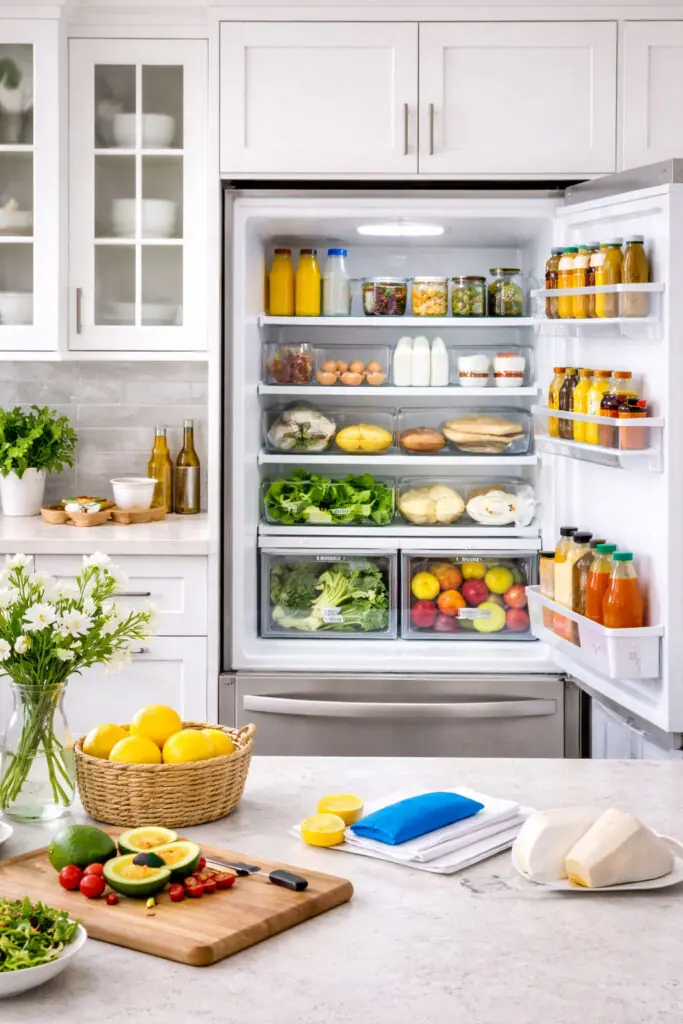
Good food storage is one of the easiest ways to save money, waste less, and eat better.
It really comes down to a few simple habits: keep cold food cold, limit exposure to air, store produce properly, and be mindful of where things go in your fridge.
None of this is complicated or expensive. Once you get into the habit, it all works in the background, helping your food last longer and making your kitchen run a lot more smoothly.
James Brown is a digital marketing strategist at A&E Cyber Publishers, a full-service digital agency specializing in SEO, web development, and content strategy. With a passion for practical, research-driven content, he enjoys breaking down everyday topics — from food storage to sustainable living — into actionable advice readers can use right away.